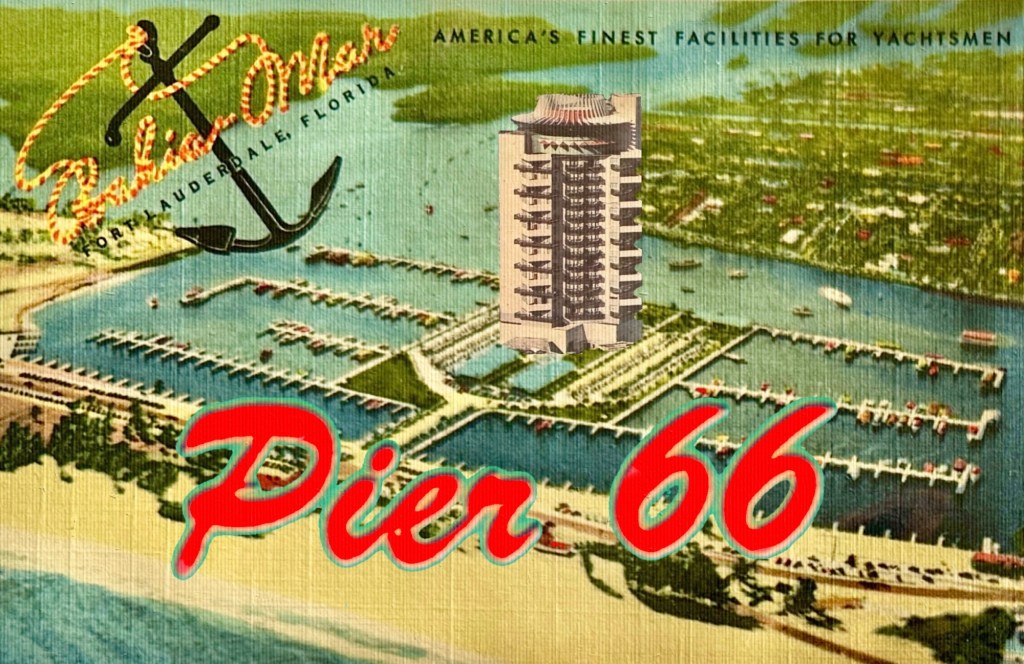
Fake headline. Fake postcard.
But, that might have been the headline had Phillips Petroleum’s interest in buying the long-financially troubled yacht basin from the city of Fort Lauderdale back in 1954 materialized. As reported in the local papers, the oil company, looking to expand into South Florida, was interested in purchasing the marina, lock stock, and boat docks and offered to pay off the debts the city carried on it as well. It wasn’t clear to reporters how serious, or not, Phillips’ interest in Bahia Mar was. What was very clear, however, was that the company was interested in expanding its business in the Fort Lauderdale area in a big way. Phillips Petroleum was on a shopping spree, including looking for a beachfront tract to build a hotel.
THE GRAND PLAN
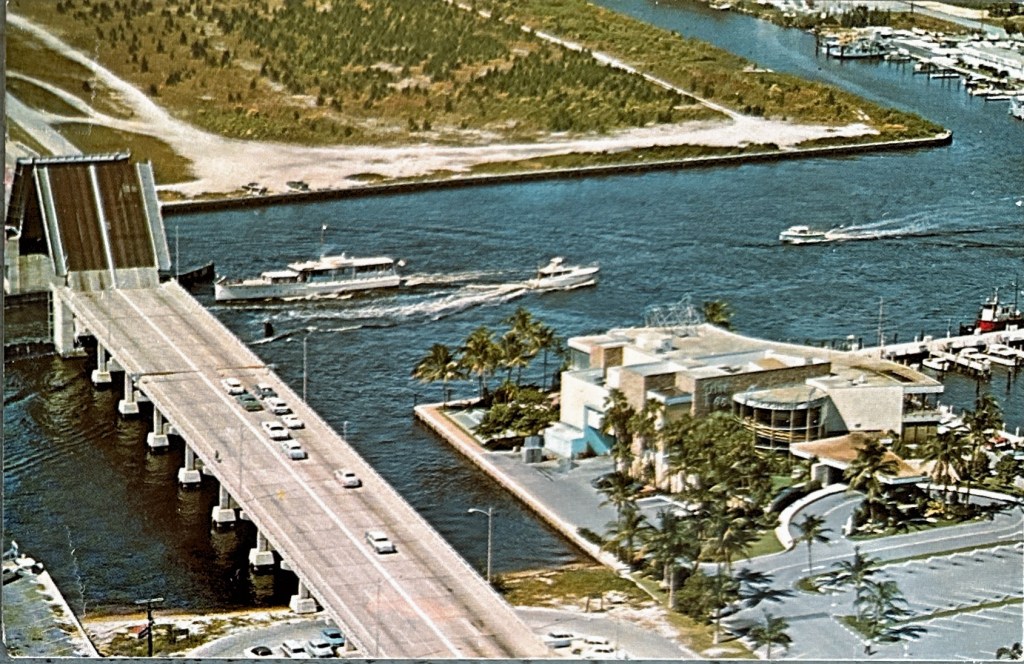
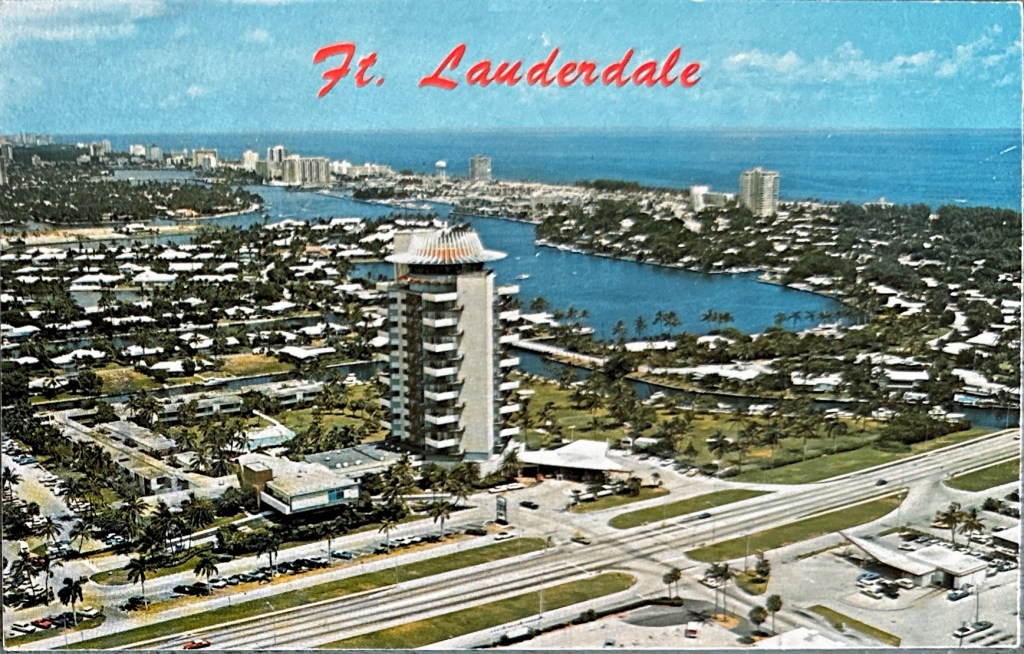
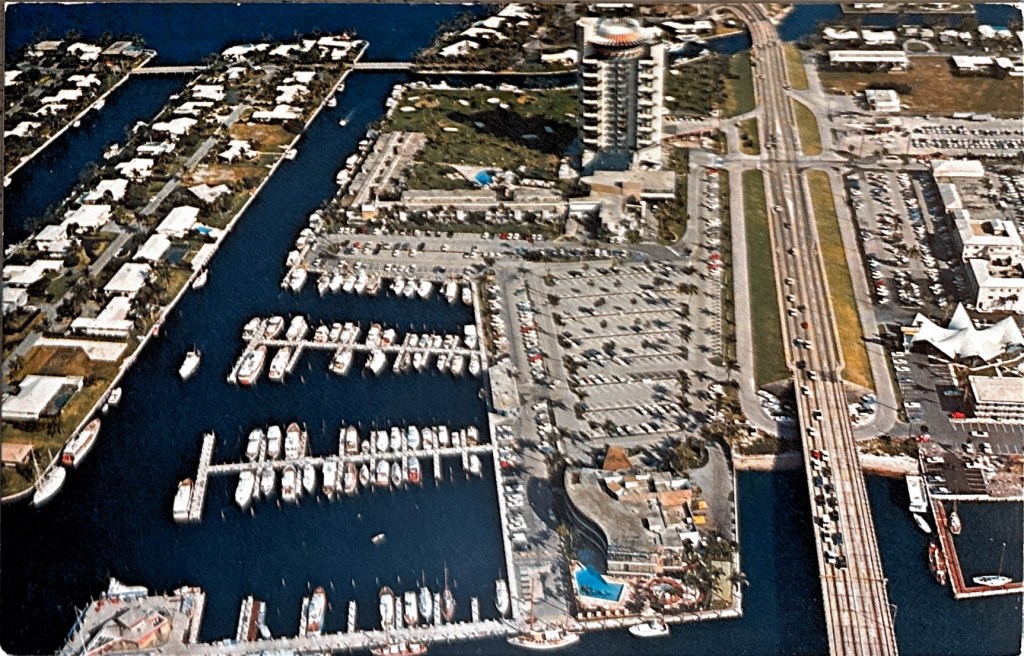
On August 28, 1954, The Fort Lauderdale News reported the “First Big Causeway Sale Recorded,” the Phillips’ purchase of an 18-acre tract of land—where Pier 66 now stands—from the L. C. Judd family for $225,000, which is in the neighborhood of $2.5 million 2024 dollars.
The causeway in question was the yet-to-be-opened A. H. Brooks Memorial Causeway, now commonly known as the 17th Street Causeway. Locals had long envisioned a bridge link as necessary between the city and the beach area south of Las Olas. Construction on a bridge had started in the land boom year of 1925, got blown to bits with the 1926 hurricane, reimagined and restarted in 1954, and opened with much hullabaloo on February 25, 1956. But even then—and not unlike today—opinions varied; “experts agree that rather than alleviate traffic jams on the beach, it will add to the headaches of most motorists.”
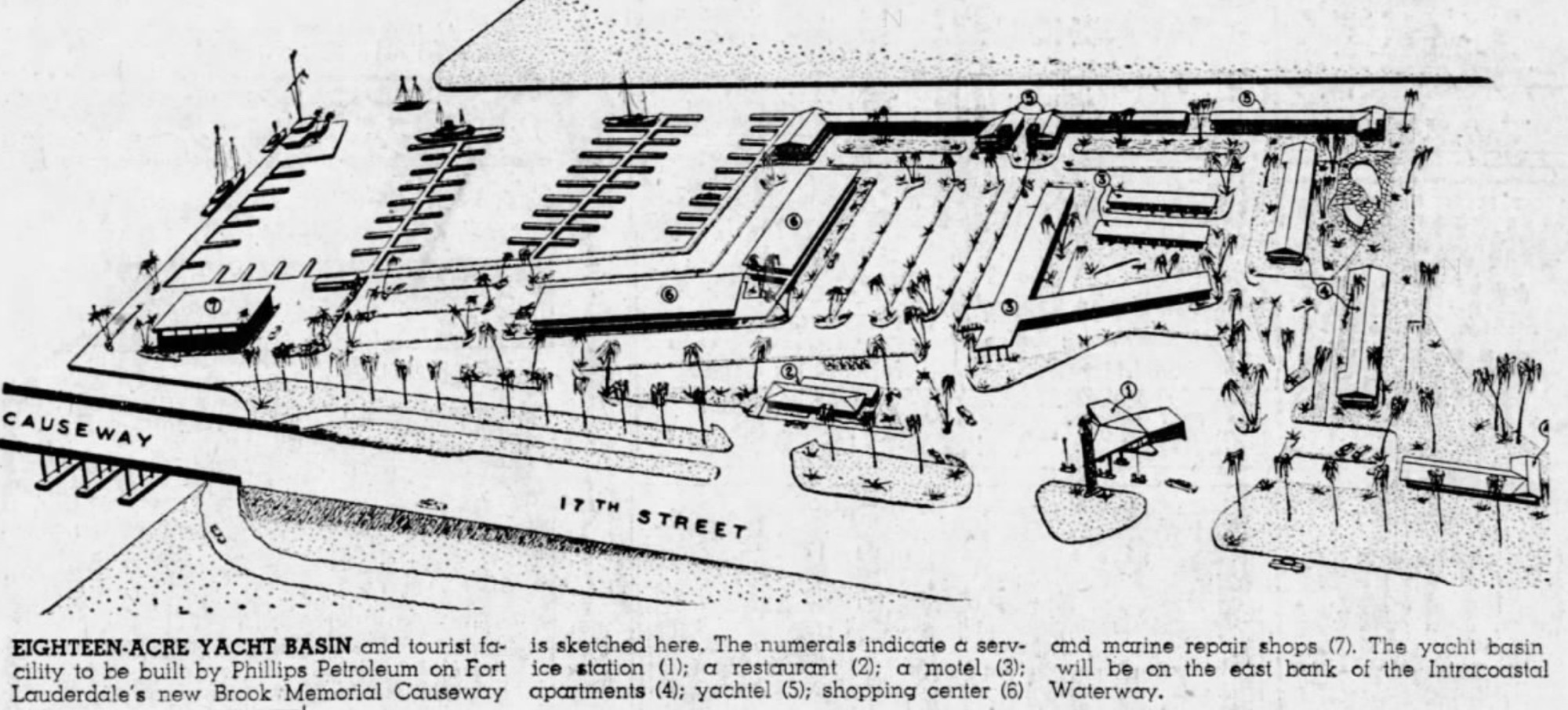
Eventually, Phillips made the company plans public on January 21, 1955, when they announced a “huge expansion” in Fort Lauderdale. It would be a three-part endeavor; “a tourist and local service facility” would be developed on its recently purchased 17th Street Causeway property, a 29-acre oil depot terminal complex would be constructed in Port Everglades, and 24 Phillip 66 service stations would be built throughout Fort Lauderdale. At the time of the announcement, construction of a service station had already begun on the 17th Street site, and soon, according to reports, a restaurant would be added to the site. Longer-range plans envisioned a motel, shopping center, marine service center, yacht basin, and a “yachtel,” a motel next to boat docks. This yachtel also called for a bar “with drinks served right in your boat.” Imagine that. The project’s name was the “17th St. Causeway Marina.” The Pier 66 moniker would come later.
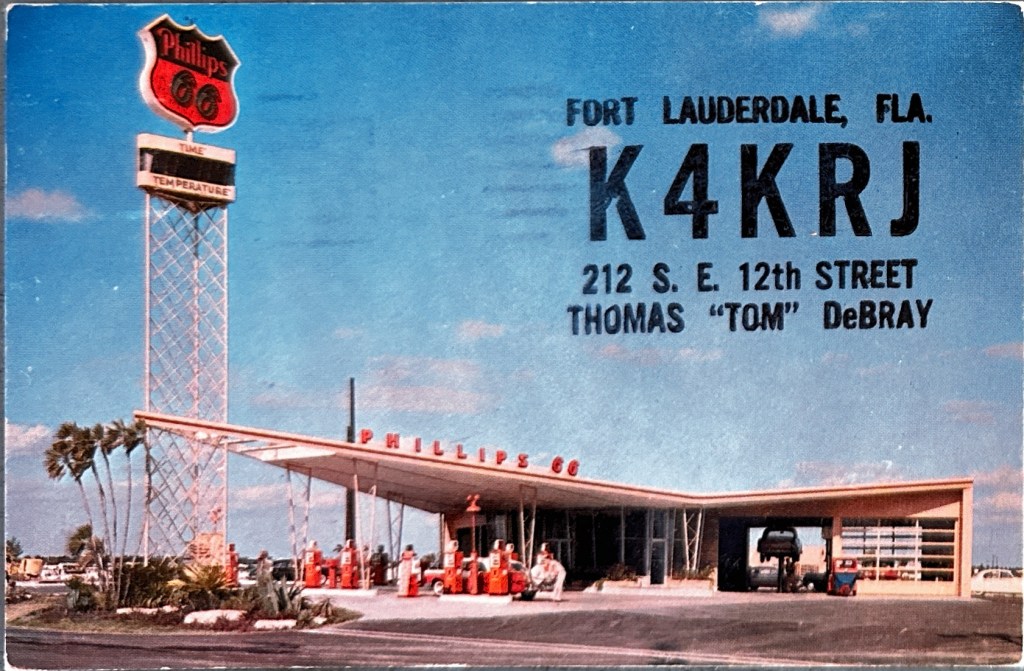
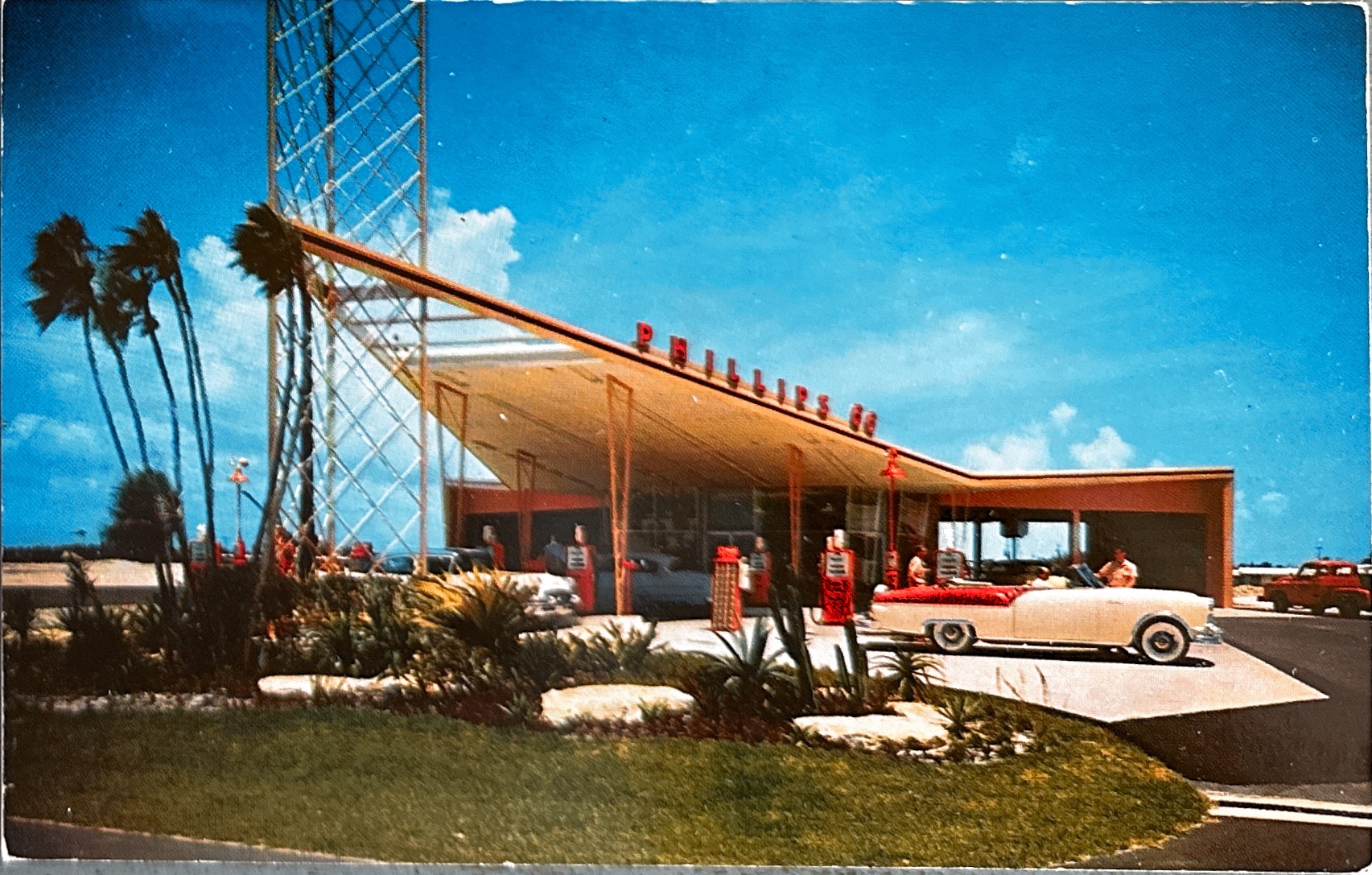
THE SERVICE STATION
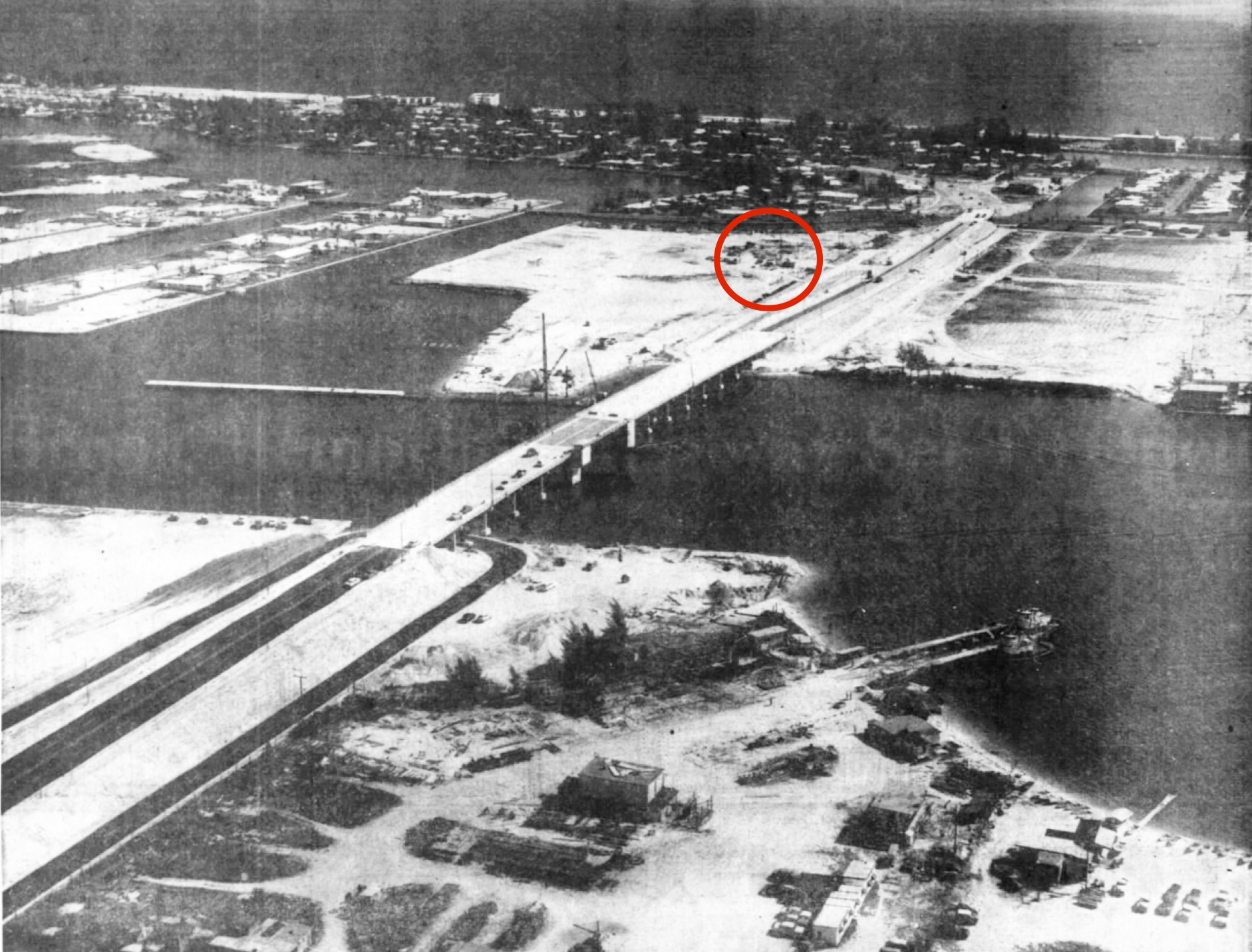
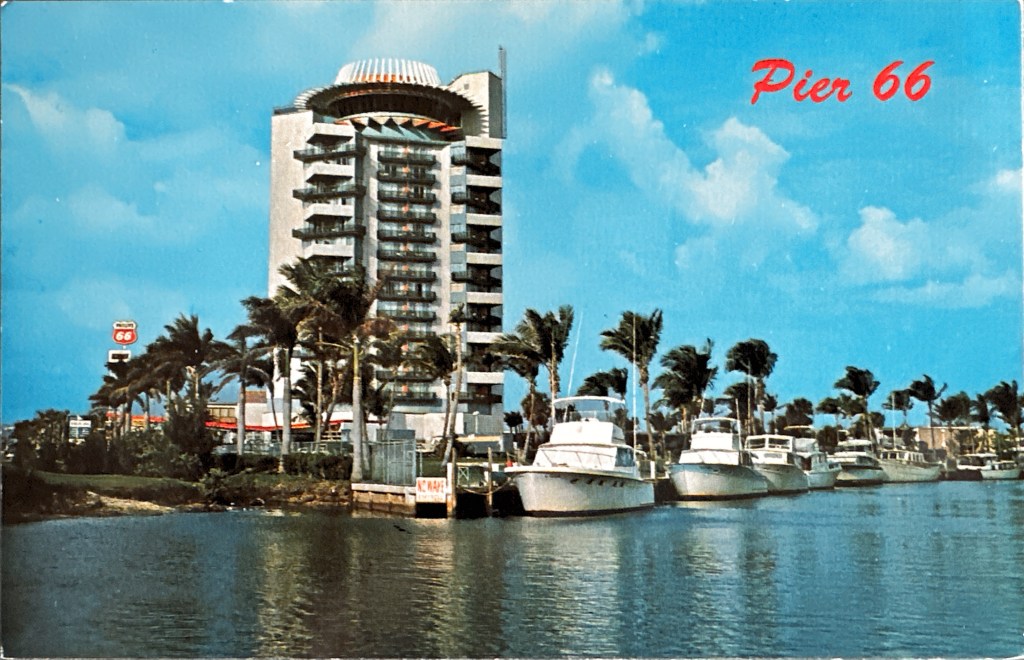
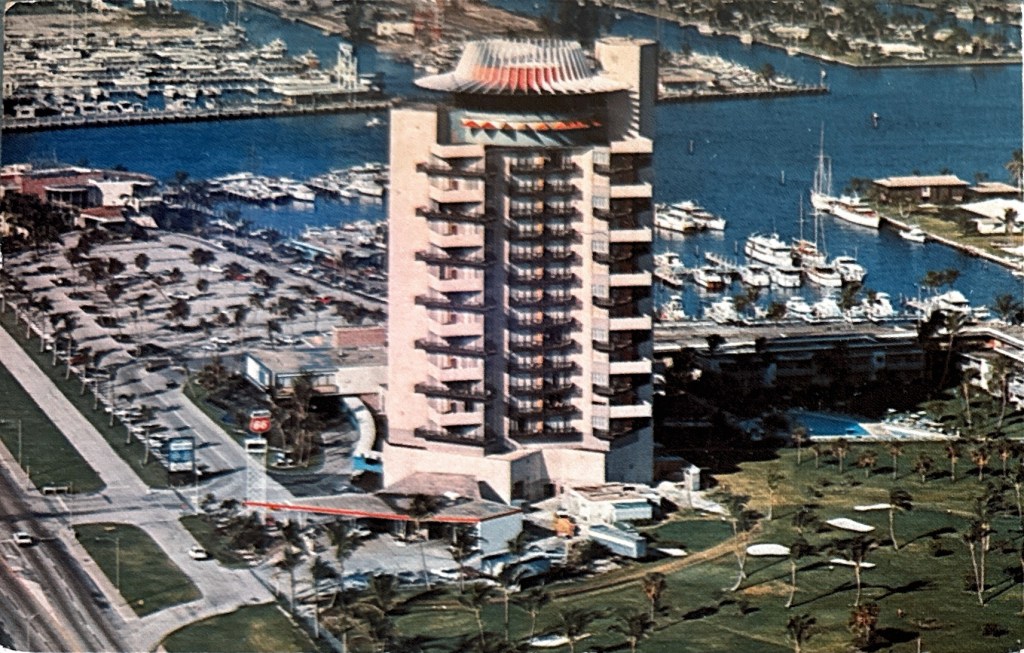
Seawall permits were in hand by early December 1955, and preliminary dock construction was underway. The first building completed on site was the gas station in early May 1956, followed by an administration building. With the awarding of the construction contract for the admin building, the name “Pier 66” appeared for the first time in the Fort Lauderdale News on June 15, 1956. The company continued its “66” theme, their tribute to the historic Route 66 highway.
THE RESTAURANT AND YACHT CLUB
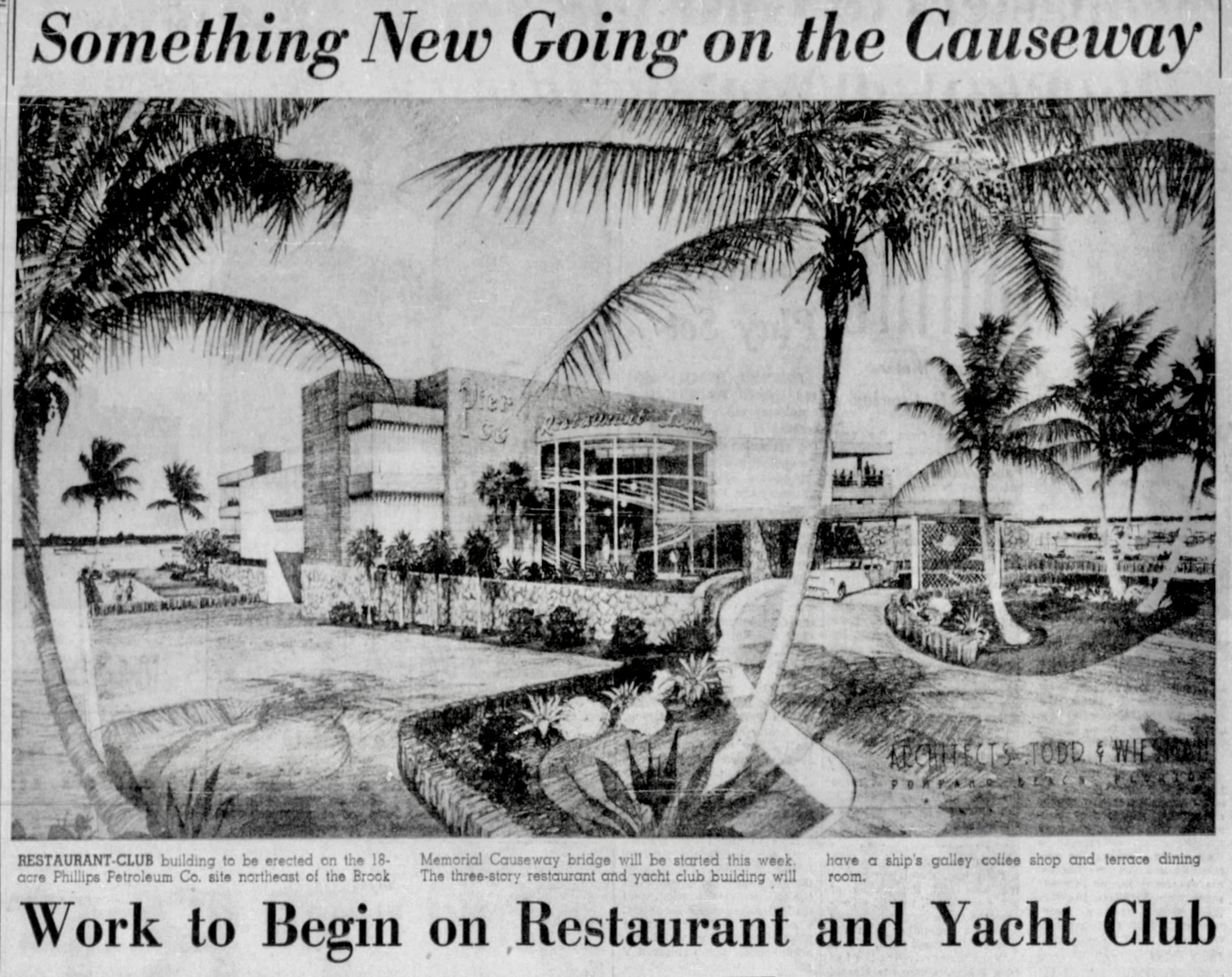
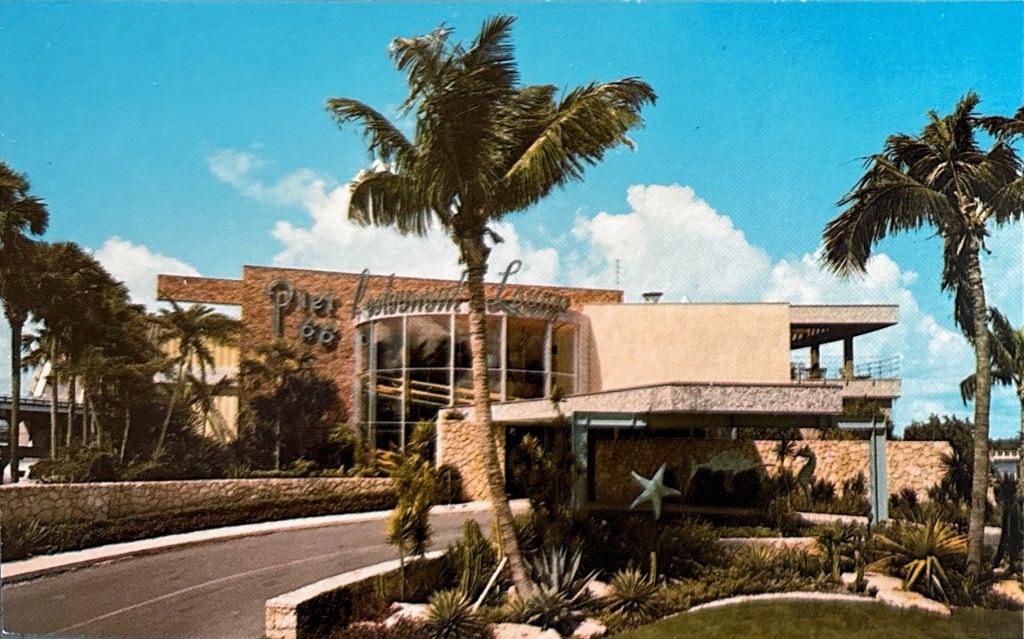
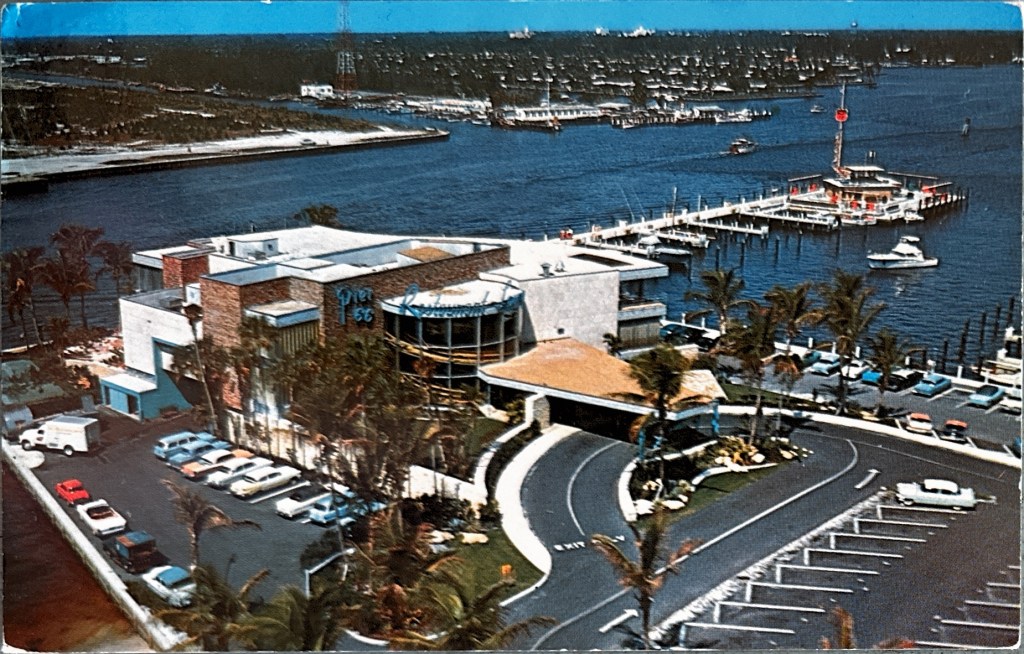
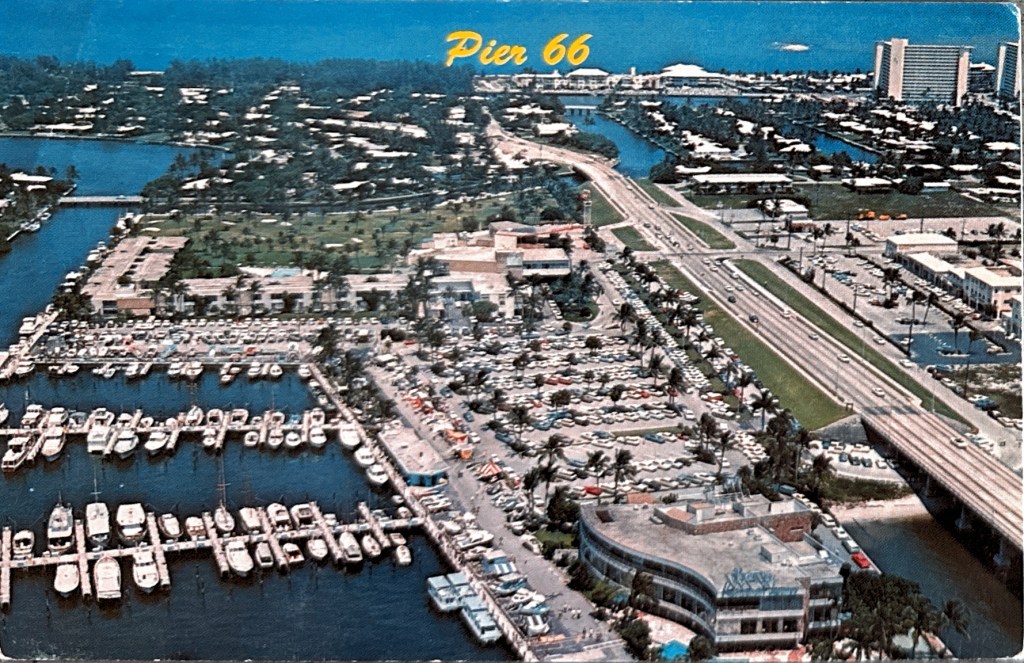
By September 1956, a permit was issued for the “ultra-modern” three-story restaurant with a yacht club. And with much fanfare, on November 22, 1957, the restaurant and club opened to the public. Phillips selected The Western Hills Management Group to manage the restaurant and club. Western Hills operated a portfolio of luxury hotels, mainly in the western states, including the Desi Arnez Hotel in Palm Springs.
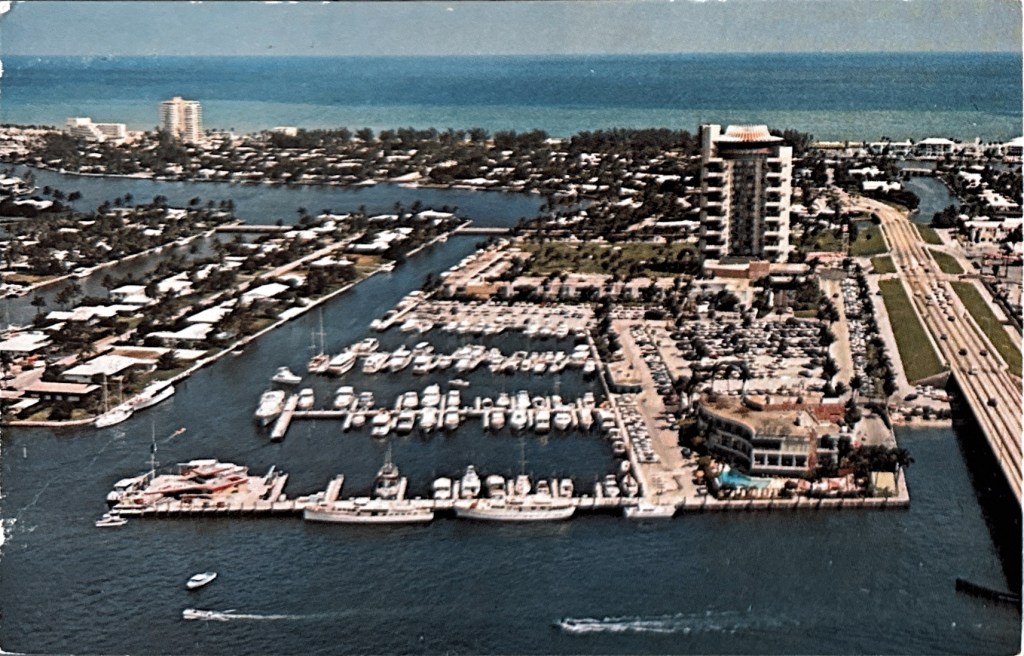
With the opening of the 126-slip marina, the restaurant, and the yacht club, Phillips announced two more property development phases: a shopping center with “a variety of fine shops” and a 100-room motel with a “cabana club.”
THE MOTEL
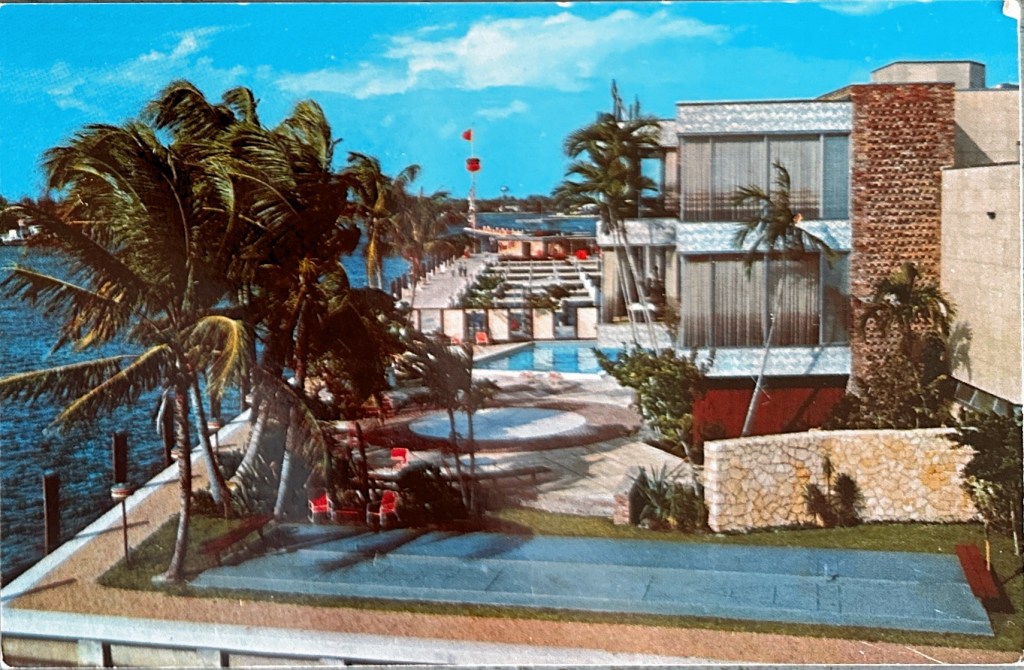
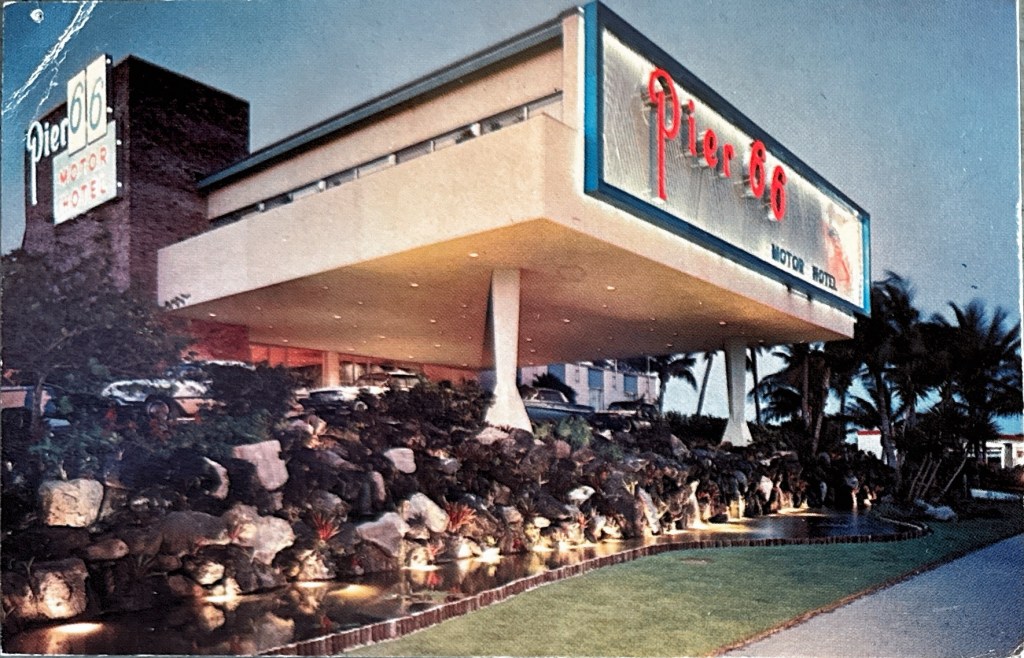
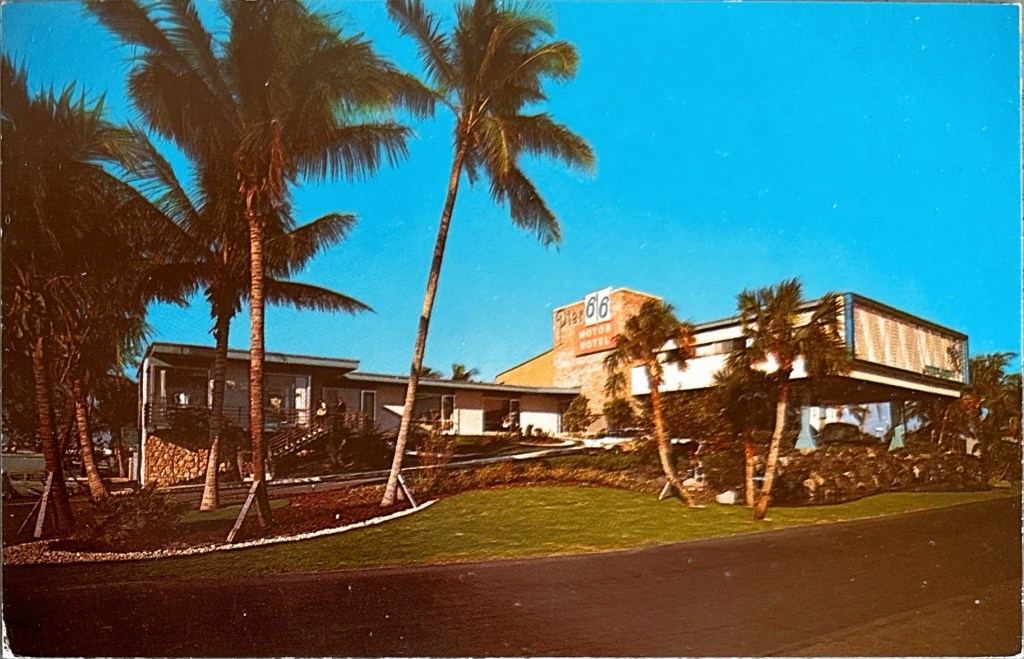
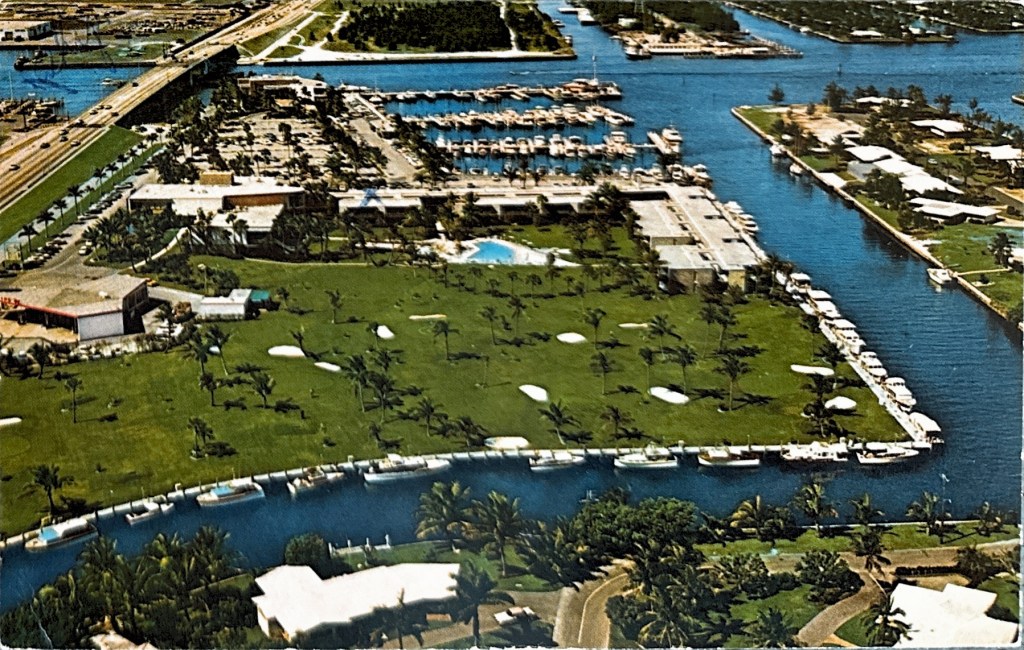
The motel, “a luxurious 102-room motor hotel,” was officially announced in June 1959 and opened to guests on November 13, 1959. Western would also manage the hotel. A par-3 nine-hole golf course—designed by local Landscape Architect Fred Stresau—officially opened on the east end of the property on August 1, 1960. Plans for a separate shopping center seem to have fallen off the drawing board.
THE TOWER
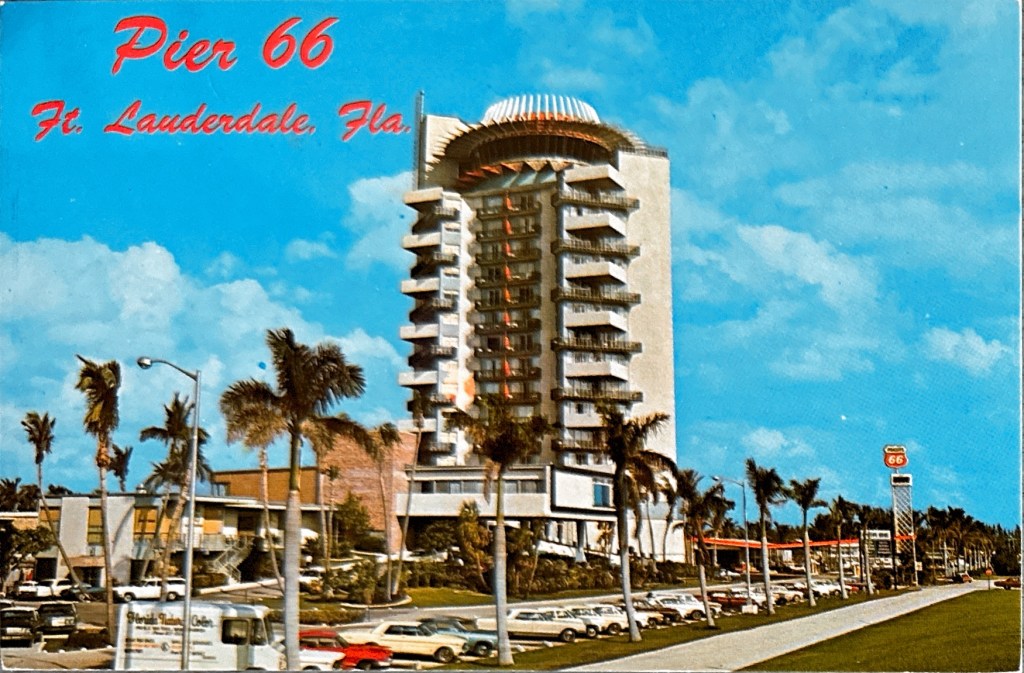
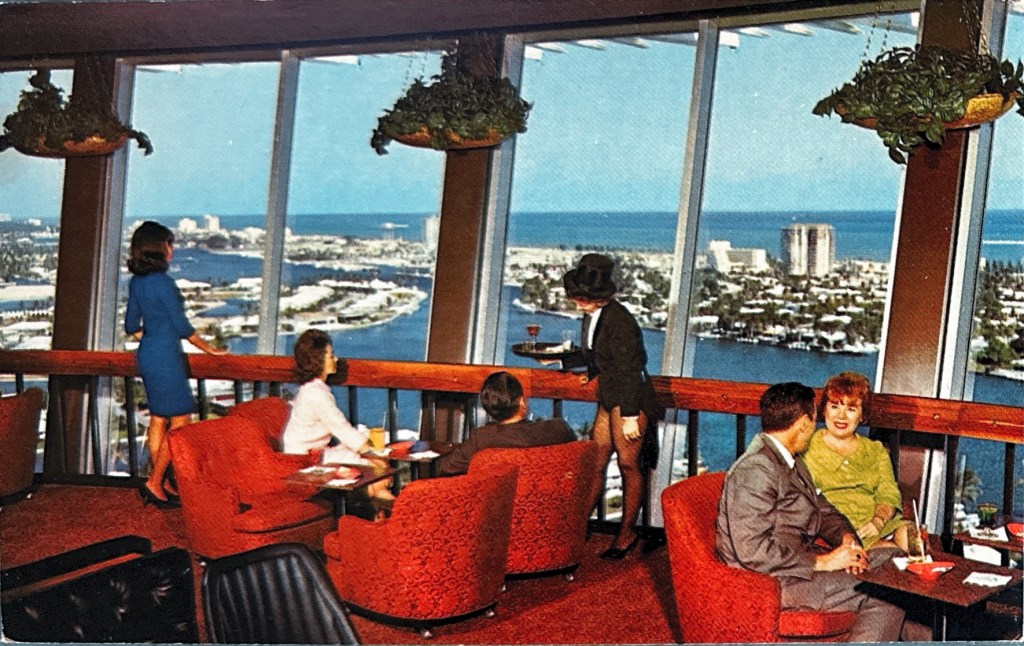
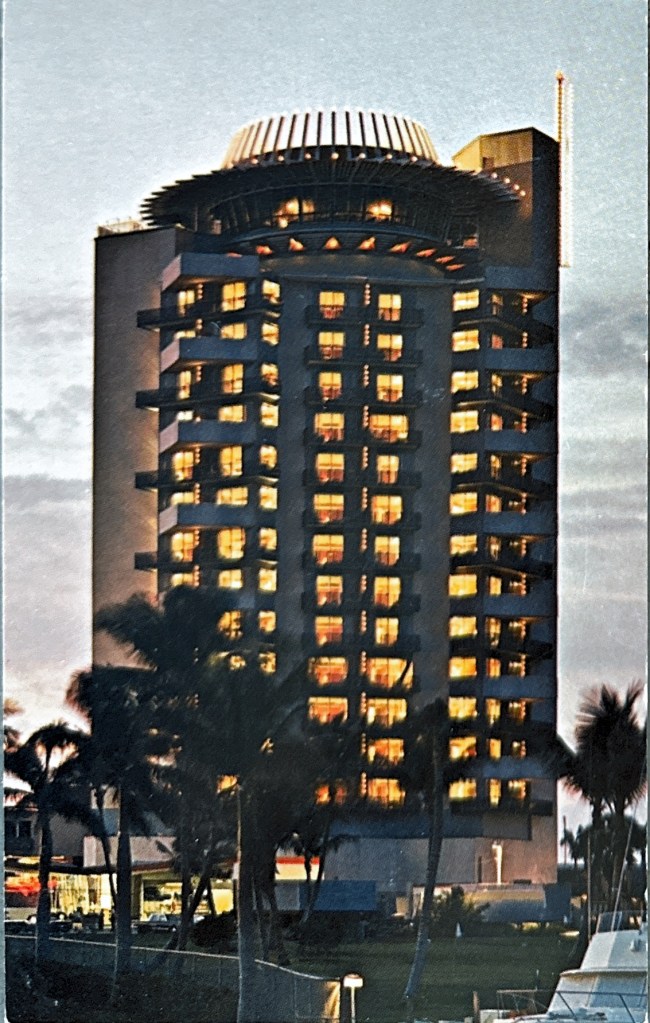
It wasn’t many years before Pier 66 expanded yet again, this time with its iconic—for Fort Lauderdale— “super-modern” hotel tower and its rotating bar top. In April 1963, the company received a zoning variance, allowing them to exceed the city’s building height limit of 150 feet. The 210-foot-tall tower’s groundbreaking ceremony was on January 24, 1964. The tower construction had its challenges, not the least of which was that the building got the nickname “The Leaning Tower of Port Everglades.” The structure was listing to one side, four inches off vertical. But by late August 1965, after repairs, the foundation had stabilized, and work continued toward an opening in early December 1965. With less fanfare than in 1959, when the motel first opened, the tower with its 156 rooms—decorated in gold, orange, blue, or green—was now the centerpiece of the Pier 66 complex. It wasn’t until February 1966 that the convention halls and banquet rooms would open. But by then, the new tower with its revolving Pier Top Lounge had already started its long run in Fort Lauderdale history.

BOOTS
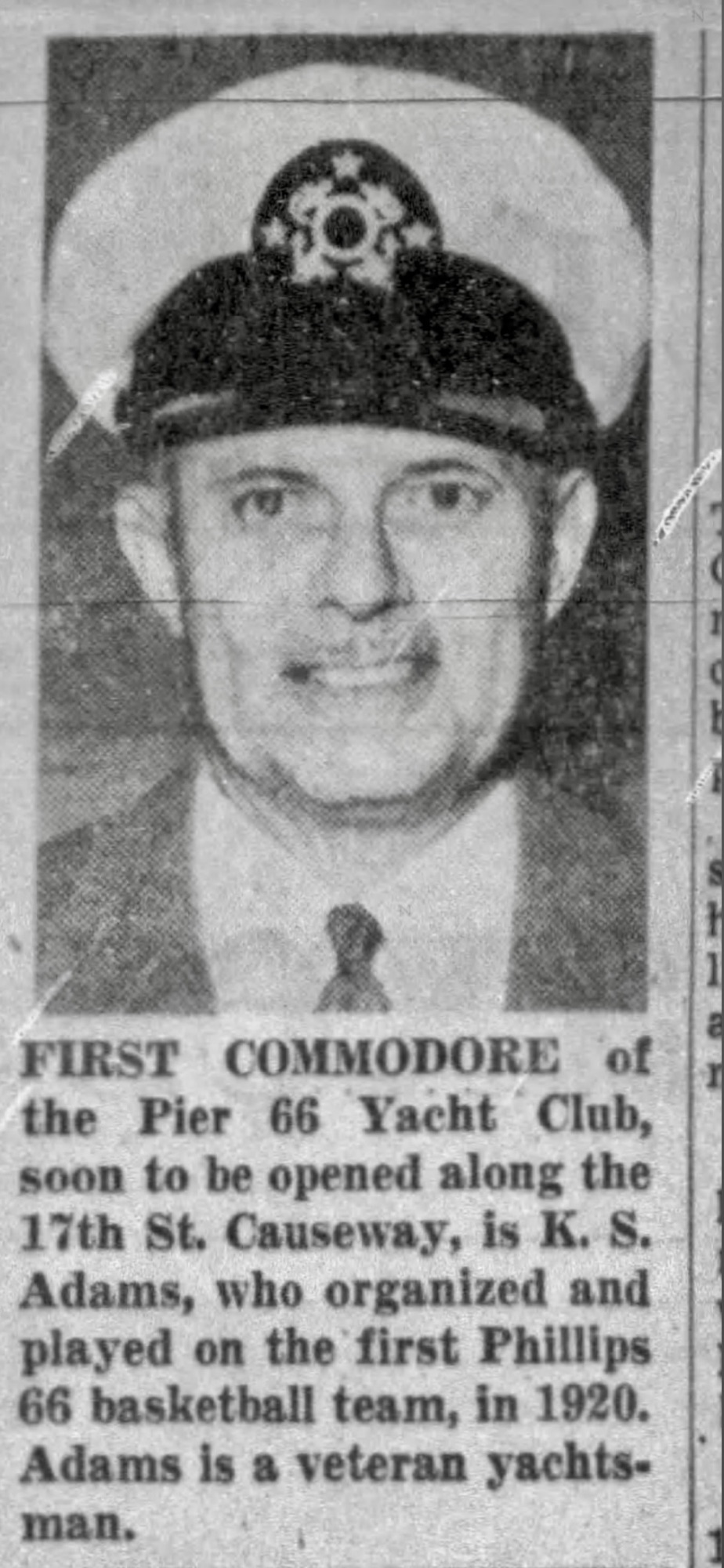
The driving force behind all things Pier 66 was Kenneth S. “Boots” Adams. He and his family first vacationed in Fort Lauderdale in 1952, staying at the Marie Antoinette, an oceanfront apartment hotel along A1A, north of Hugh Taylor Birch State Park. Boots was President of Phillips Petroleum then and quickly fell in love with the town and realized its business opportunities. Boots claimed his discovery of Fort Lauderdale and South Florida was “the highlight of my life.” He became a winter resident with a home on Sea Island Drive off Las Olas Boulevard. Based in Bartlesville, Oklahoma, Phillips Petroleum was where Boots rose from warehouse clerk to board chairman during his time with the company. He retired in 1968.
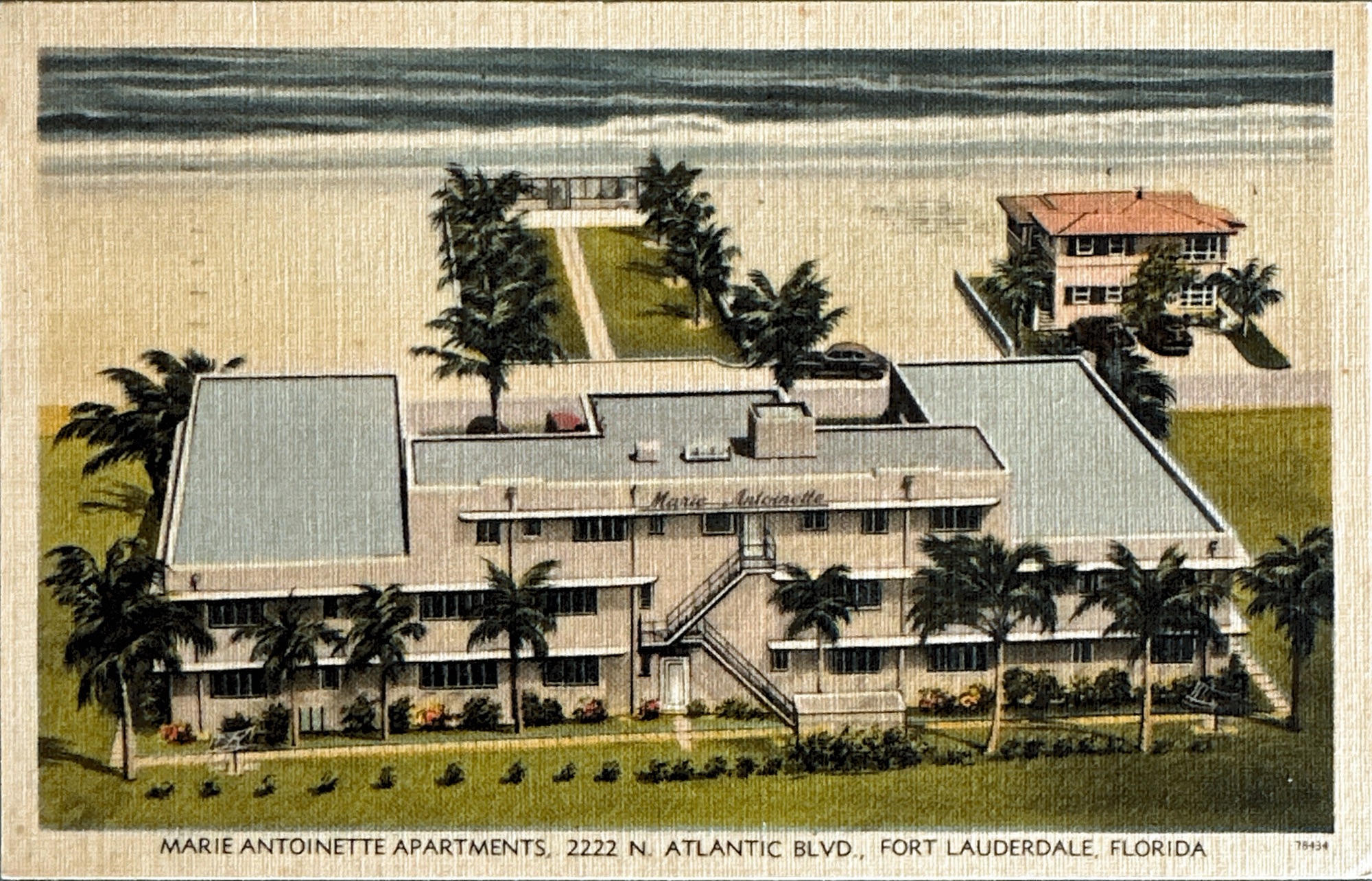
As the tale goes, according to Boots, he tossed and turned for three nights at the Marie Antoinette, not because of the sound of the waves but because of the traffic motoring along A1A. All those cars and not a Phillips 66 gas station in sight. Not only in Florida but seven other southeastern states as well. So, it was a quick trip back to headquarters to convince the board that this was the place for the company to invest. And they did.
NEXT UP
Phillips Petroleum sold Pier 66 in 1985, and since then, ownership has changed over the years. The Tavistock Development Company is currently redeveloping it, and according to a company online statement, it is “in the process of reimagining Pier Sixty-Six as Fort Lauderdale’s ‘social harbor.’ A thoughtful destination where those seeking relaxation and refuge; engaging events and alluring amenities; and an approachable marine and resort lifestyle, all come together.” https://www.info-piersixtysix.com/about
That all sounds nice, but as is said, the more things change, the more the traffic woes remain—at least in Fort Lauderdale.
***
NOTES
All the postcards are from my personal collection, many of which may be see here FortLauderdalePostcards.com
Newspaper references
Fort Lauderdale News
May 02, 1953, August 28, 1954, August 29, 1954, December 19, 1954, January 21, 1955, February 24, 1956, June 01, 1956, September 01, 1956, September 08, 1956, December 17, 1956, January 12, 1957, July 15, 1957, November 22, 1957, February 14, 1959, June 07, 1959, November 13, 1959, August 14, 1960, April 18, 1963, January 25, 1964, December 04, 1965, March 31, 1975
Miami Herald
August 31, 1954, September 05, 1954, October 05, 1954, January 22, 1955, May 13, 1956, September 09, 1956, November 07, 1957, November 15, 1959, June 06, 1965, August 27, 1965, May 21, 1967, April 01, 1975

 Fort Lauderdale Postcards
Leave a comment